
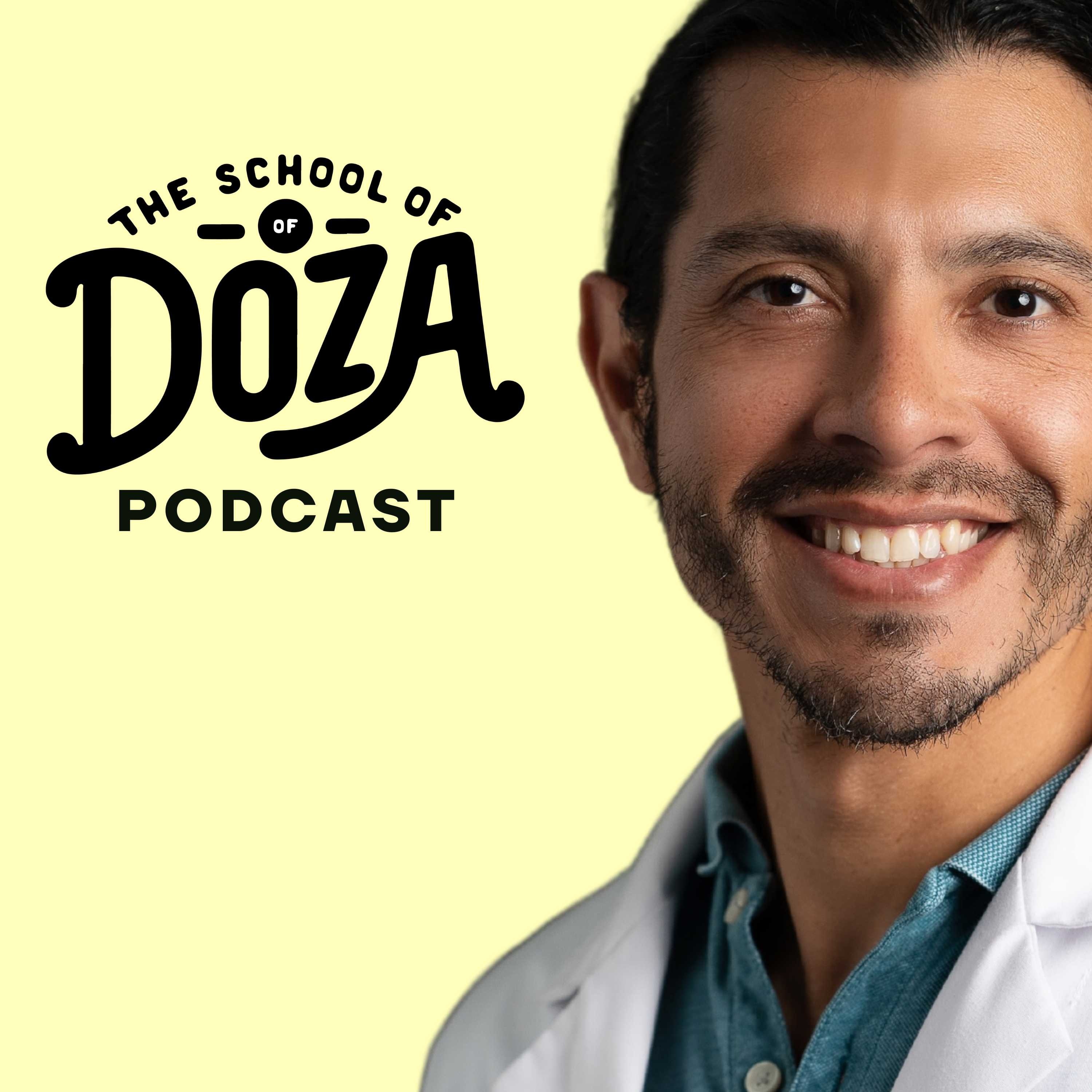
Nurse Doza’s Podcast comes to life in a very interactive way. Sure you can listen to the podcast, but this is just the beginning of your education in health. Every week, Nurse Doza dives into new health subjects and encourages you to submit your questions to be answered on the podcast, newsletter, YouTube, LinkedIn, and every other way that you like to take in educational media.
Episodes
21 minutes ago
21 minutes ago
1 min
In this Supplement Ingredient Series episode, Nurse Doza breaks down bovine adrenal gland — a glandular supplement with over a century of use, rooted in the ancestral practice of eating organ meat for nutrients the body needs to function. He explains how cortisol dysregulation can show up as afternoon crashes, mood shifts, and restless nights, and why adrenal glandular is paired with adaptogens and B vitamins in a three-in-one formula built to support the stress response.
FEATURED PARTNER
Zen (Stress Relief) by MSW Nutrition is the bovine adrenal gland formula Nurse Doza reaches for himself — and the reason is the ingredient itself, which is genuinely hard to find on a shelf. One capsule delivers 125 mg of adrenal gland tissue sourced from Argentina, paired with four standardized adaptogens (Asian ginseng, rhodiola, eleuthero, and schisandra), plus vitamin C, vitamin B6 as P5P, and pantothenic acid. That's the three-in-one Nurse Doza describes in this episode: glandular, adaptogens, and B vitamins in one capsule, formulated to support the body's stress response and steadier daily energy.
👉 Get Zen — Buy 2, Get 1 Free: https://zen.mswnutrition.com One bottle is $69 (60 capsules, 30-day supply at one capsule twice daily). The 3-bottle bundle is $138 (regularly $207) with free shipping. August 2026 offer — confirm the end date before publishing.
These statements have not been evaluated by the Food and Drug Administration. This product is not intended to diagnose, treat, cure, or prevent any disease. If you are pregnant or nursing, have a thyroid or adrenal condition, or take prescription medication — including blood pressure medication, given the licorice root content — talk with your provider before starting a new supplement.
JOIN THE SCHOOL
Stress, energy, and sleep are tangled together, and sorting out which one to pull on first is a lot easier when you're not guessing alone. Inside the School of Doza, members work through this exact pattern — the 3 PM crash, the wired-and-tired evening, the sleep that never quite restores — alongside others chasing the same thing. Every Wednesday at 1 PM Central there's a live group consult (an "Ask Me Anything") where you can bring your own labs, supplements, and questions to Nurse Doza in real time.
👉 Start your free trial: https://community.schoolofdoza.com/c/start-here
5 KEY TAKEAWAYS
- Glandular supplements are an old idea, not a new one. Adrenal glandulars have been used for over a hundred years, and the thinking behind them goes back much further — indigenous cultures ate organ meat because they understood it supplied nutrients the body needed to function.
- The 3 PM crash often traces back to cortisol rhythm, not willpower. Cortisol is supposed to peak in the morning and taper through the day. When that curve flattens or shifts, the downstream effects show up in energy, mood, and how well you sleep at night — all three, not just one.
- Bovine adrenal gland is the hard-to-find piece of the stack. Most stress formulas stop at adaptogens. A glandular ingredient is uncommon on shelves, which is why Nurse Doza specifically calls it out as the reason he uses Zen.
- The adaptogens and B vitamins are doing real, separate work. Rhodiola and ginseng have the strongest human research behind them for stress-related fatigue, and pantothenic acid (B5) and B6 are cofactors your body uses in the energy pathways underneath the whole system. The glandular isn't carrying the formula alone.
- Support the system, don't expect a switch. Adrenal support is about giving the stress response better inputs over time — not overriding it. Individual responses vary, and anyone on medication or managing a thyroid or adrenal condition should loop in their provider first.
RESOURCES
Based on peer-reviewed literature:
- Cortisol activity, fatigue & everyday life – Systematic review and subset meta-analysis of unstimulated cortisol secretory activity and its relationship with fatigue. Psychoneuroendocrinology, 2013. https://pubmed.ncbi.nlm.nih.gov/23916911/
- Rhodiola rosea & stress-related fatigue – Randomised, double-blind, placebo-controlled, parallel-group study of standardised extract SHR-5 in subjects with stress-related fatigue. Planta Medica, 2009. https://pubmed.ncbi.nlm.nih.gov/19016404/
- Rhodiola rosea, physical & mental fatigue – Systematic review of the clinical evidence. BMC Complementary and Alternative Medicine, 2012. https://pubmed.ncbi.nlm.nih.gov/22643043/
- Adaptogens & the stress response – Review of the evidence-based efficacy of adaptogens in fatigue and the molecular mechanisms behind their stress-protective activity. Current Clinical Pharmacology, 2009. https://pubmed.ncbi.nlm.nih.gov/19500070/
- Korean Red Ginseng & fatigue – Randomized, double-blind, placebo-controlled study of Korean Red Ginseng on fatigue. Korean Journal of Internal Medicine, 2024. https://pubmed.ncbi.nlm.nih.gov/38576235/
Note: the citations above support the adaptogen and cortisol-rhythm portions of this episode. There is no published human clinical literature on bovine adrenal glandular supplementation — it is presented here as a traditional-use ingredient, not an evidence-backed intervention.
🔗 Connect with Nurse Doza:
JOIN MY SCHOOL for FREE: https://community.schoolofdoza.com/c/start-here
- YouTube: https://www.youtube.com/channel/UCwcKyagDi468WscAOWM5VHA
- Instagram: https://www.instagram.com/nursedoza/
- Website: http://www.nursedoza.com/
- LinkedIn: https://www.linkedin.com/in/jonathan-mendoza-dc-aprn-np-c-0609a038/
- TikTok: https://www.tiktok.com/@nursedoza
- Twitter: https://twitter.com/nursedoza
4 days ago
4 days ago
5 min
Methylation is a chemical process running billions of times per second inside your body — and when it slows down, you feel it as fatigue, low mood, brain fog, and hormone symptoms. Nurse Doza breaks down what methylation actually does, why the MTHFR gene variant makes the cycle run less efficiently, why folic acid is the wrong form of folate if you carry it, and the four steps that support your methyl donor supply.
FEATURED PRODUCT
Bliss (Mood Booster) — $129
Bliss is a lemon-flavored daily stick pack built around TMG (trimethylglycine) — a naturally occurring methyl donor. It is formulated to support the biochemical reactions that require methyl groups: neurotransmitter synthesis and healthy mood, the conversion of homocysteine to glutathione, and liver health.*
If the episode described you — normal labs, still running on empty — Bliss is the piece that feeds the cycle directly instead of asking your genetics to do the conversion work.
👉 Get Bliss here: https://mswnutrition.com/products/bliss
JOIN THE SCHOOL
Understanding methylation is one thing. Knowing which form of B12 to take, what to ask for on a lab panel, and what to do when your results come back "normal" is another — and that is exactly what the School of Doza is for.
Inside, you get the courses that go deeper than a 7-minute video, a community of people working through the same fatigue-and-brain-fog puzzle, and the Wednesday AMA — a live group consult session where you can bring your own questions to Nurse Doza in real time. It is live only, so it is a conversation, not a recording.
👉 Start your free trial: https://community.schoolofdoza.com/c/start-here
5 KEY TAKEAWAYS
- Methylation is a transfer reaction. A methyl group — one carbon bonded to three hydrogens — moves from one molecule to another, and your body needs that transfer for neurotransmitter production, hormone clearance, DNA repair, cellular energy, and glutathione synthesis.
- When methylation runs slowly, the symptoms get blamed on other things. Chronic fatigue, low mood, anxiety, hormone imbalance, sluggish detox, brain fog, elevated homocysteine, and inflammation are not random — methylation is often the thread connecting them.
- MTHFR is the gene that converts folate into its active, usable form. A 2025 review in Genes reports the common C677T polymorphism averages 30–40% prevalence across populations and reduces enzyme efficiency by roughly 35% per mutated allele — so carrying two copies means a meaningfully slower cycle.
- If you carry the variant, folic acid is the wrong form. Methylfolate is already converted, so your body does not have to perform the exact step the variant makes harder. The same logic applies to choosing methylated B12 over cyanocobalamin.
- TMG (trimethylglycine, also called betaine) donates methyl groups straight into the cycle. A 2021 review in Biology describes betaine restoring the SAM:SAH methylation ratio and supporting liver health and glutathione production — which is why TMG is the backbone of Bliss.
RESOURCES
- MTHFR Gene Polymorphisms: A Single Gene with Wide-Ranging Clinical Implications (Genes, 2025): https://www.mdpi.com/2073-4425/16/4/441
- Beneficial Effects of Betaine: A Comprehensive Review (Biology, 2021): https://www.mdpi.com/2079-7737/10/6/456
- The Role of Folate and MTHFR Polymorphisms in the Treatment of Depression (Altern Ther Health Med, 2021): https://pubmed.ncbi.nlm.nih.gov/32827402/
- Bliss (Mood Booster) by MSW Nutrition: https://mswnutrition.com/products/bliss
- Join the School of Doza — start your free trial: https://community.schoolofdoza.com/c/start-here
CONNECT WITH NURSE DOZA
- JOIN MY SCHOOL for FREE: https://community.schoolofdoza.com/c/start-here
- YouTube: https://www.youtube.com/channel/UCwcKyagDi468WscAOWM5VHA
- Instagram: https://www.instagram.com/nursedoza/
- Website: http://www.nursedoza.com/
- LinkedIn: https://www.linkedin.com/in/jonathan-mendoza-dc-aprn-np-c-0609a038/
- TikTok: https://www.tiktok.com/@nursedoza
- Twitter: https://twitter.com/nursedoza
Aug 13, 2026
Aug 13, 2026
2 min
In this Wellness Tech installment, Jonathan Mendoza, DC, APRN, NP-C — Nurse Doza — explains why red light panels have become a daily fixture in his clinic and his home. He covers how red and near-infrared wavelengths reach the mitochondria to support healthy ATP production, why panels deliver solar-style input without UV exposure, how he personally uses violet light to wind down at night, and what the emerging 40Hz gamma-frequency research does and does not yet show in humans.
FEATURED PARTNER
LightpathLED builds veteran-owned red and near-infrared light therapy panels. Nurse Doza uses one daily and highlights this brand specifically because it offers more than a single red setting — it includes violet-spectrum output and adjustable frequency, including a 40Hz option he notes he hasn't found on other consumer panels.
Shop: https://lightpathled.com
Code: NURSEDOZA (discount applied at checkout)
Current promo:Select Diesel Gen3 panels ship with a free stand — verify at checkout, promos change
Join the School of Doza
The School of Doza is a paid health-education community with live group consults every **Wednesday at 1 PM Central**, plus courses, protocols, and direct access to Nurse Doza.
Start your free trial: https://www.schoolofdoza.com
---
5 Key Takeaways
1. Red and near-infrared light interact with your mitochondria, not just your skin.These wavelengths are absorbed by cytochrome c oxidase in the electron transport chain, which supports healthy ATP production — the mechanism researchers call photobiomodulation.
2. A panel delivers solar-style light input without the UV load.Most people spend the majority of daylight hours indoors under light their cells don't recognize. Red light panels are one way to add that input without the burn risk that comes with UV exposure.
3. Panels are low-friction to use. No undressing required — Nurse Doza sits in front of his and lets it hit his forehead. He uses sessions in the two-to-five-minute range as his own personal routine, not a prescribed protocol.
4. Violet light sits at the opposite end of the visible spectrum from red. Nurse Doza reports using violet output in the evening as part of his wind-down. This is his subjective experience — violet-specific calming effects are not yet well established in the peer-reviewed literature.
5. The 40Hz frequency setting is an area of active research, not settled science. Gamma-frequency entrainment at 40Hz has been studied for its effects on brain activity, but the most-cited amyloid findings are from animal models and have published author corrections. Interesting, worth following — not a treatment.
Citations:
1. de Freitas LF, Hamblin MR. **Proposed Mechanisms of Photobiomodulation or Low-Level Light Therapy.** *IEEE Journal of Selected Topics in Quantum Electronics.* 2016. PMID: 28070154 — https://pubmed.ncbi.nlm.nih.gov/28070154/
2. Hamblin MR. **Mechanisms and Mitochondrial Redox Signaling in Photobiomodulation.** *Photochemistry and Photobiology.* 2018. PMID: 29164625 — https://pubmed.ncbi.nlm.nih.gov/29164625/
3. Maghfour J, Ozog DM, Mineroff J, Jagdeo J, Kohli I, Lim HW. **Photobiomodulation CME Part I: Overview and Mechanism of Action.** *Journal of the American Academy of Dermatology.* 2024. PMID: 38309304 — https://pubmed.ncbi.nlm.nih.gov/38309304/
4. Nairuz T, Cho S, Lee JH. **Photobiomodulation Therapy on Brain: Pioneering an Innovative Approach to Revolutionize Cognitive Dynamics.** *Cells.* 2024. PMID: 38891098 — https://pubmed.ncbi.nlm.nih.gov/38891098/
5. Iaccarino HF, Singer AC, Martorell AJ, et al. **Gamma frequency entrainment attenuates amyloid load and modifies microglia.** *Nature.* 2016;540:230–235. PMID: 27929004 · PMCID: PMC5656389 — https://pmc.ncbi.nlm.nih.gov/articles/PMC5656389/
*Note: animal-model study. Two author corrections have since been published (2018, 2024).*
Bonus — sleep and LED light therapy:
Liao YH, Tai CJ, Ming JL, Lin LH, Chien LY. **The Effectiveness of Low-Level LED Light Therapy for Sleep Problems, Psychological Symptoms, and Heart Rate Variability in Shift-Work Nurses: A Randomized Controlled Trial.** *Journal of Nursing Management.* 2025. PMID: 40557249 — https://pubmed.ncbi.nlm.nih.gov/40557249/
🔗 Connect with Nurse Doza:
JOIN MY SCHOOL for FREE: https://community.schoolofdoza.com/c/start-here
YouTube: https://www.youtube.com/channel/UCwcKyagDi468WscAOWM5VHA
Instagram: https://www.instagram.com/nursedoza/
Website: http://www.nursedoza.com/
LinkedIn: https://www.linkedin.com/in/jonathan-mendoza-dc-aprn-np-c-0609a038/
TikTok: https://www.tiktok.com/@nursedoza
Twitter: https://twitter.com/nursedoza
Aug 6, 2026
Aug 6, 2026
1 min
In this School of Doza episode, Nurse Doza opens the Metabolic Series with the adrenal glands — and why you may feel tired all day, crash between 2 and 4 PM, and wake up unrested. He explains how chronic stress can keep the body stuck in fight-or-flight, why that pattern is hard to shift, and the daily levers he leans on: belly breathing, less screen time at night, and morning sunlight. Then he breaks down Zen by MSW Nutrition — adrenal glandular plus four adaptogens — for stress support.
FEATURED PARTNER
Zen by MSW Nutrition is built in three layers rather than a single botanical: **125 mg of adrenal glandular tissue** (bovine, sourced from Argentina), **four standardized adaptogens** — Asian ginseng, rhodiola, eleuthero, and schisandra — plus **cofactor nutrients** (vitamin C, B6 as P5P, and pantothenic acid). Licorice rounds out the 9-ingredient formula. It's the supplement Nurse Doza reaches for when the goal is supporting the adrenal glands and the body's stress response, instead of layering more caffeine on top of a depleted system.
👉 **Get Zen (Buy 2, Get 1 Free — 3 bottles $138, free shipping):** https://zen.mswnutrition.com
Not a subscription — every order is one-time.
*These statements have not been evaluated by the Food and Drug Administration. This product is not intended to diagnose, treat, cure, or prevent any disease. Zen contains licorice root, which may affect blood pressure and potassium and can interact with some medications. If you're pregnant or nursing, have high blood pressure, or take prescription medication — including corticosteroids or blood pressure medication — talk with your provider before starting Zen. Persistent fatigue has many possible causes; work with a licensed provider rather than self-diagnosing.*
KEY TAKEAWAYS
1. The 2–4 PM crash isn't a caffeine deficit.
2. Chronic stress can keep you stuck in fight-or-flight.
3. **"Tired but wired" is worth investigating, not self-diagnosing.** Persistent fatigue overlaps with thyroid issues, anemia, sleep apnea, blood sugar swings, and mood disorders. The symptom pattern is a signal to get properly worked up with a provider — not a diagnosis you give yourself.
4. **Three free levers, plus a way to track them.** Belly breathing, less screen time at night, and morning sunlight are the daily habits Nurse Doza returns to first — slow diaphragmatic breathing in particular has measurable effects on cardiac vagal activity. If you wear a device, resting heart rate and HRV are useful trend lines to watch over weeks, not days.
5. **Zen layers glandular, adaptogens, and cofactors.** Rather than one extract, Zen combines 125 mg of bovine adrenal glandular tissue with four standardized adaptogens and the vitamin C, B6, and pantothenic acid the stress-response pathway draws on — formulated to support adrenal function and stress resilience.
## RESOURCES
*Based on peer-reviewed literature:*
1. **HPA axis dysregulation — recognition and recovery** – Integrative review of how the hypothalamic-pituitary-adrenal axis becomes dysregulated under stress, and the diagnostic and management approaches used. *The American Journal of Medicine,* 2025. PMID 40499704 — https://pubmed.ncbi.nlm.nih.gov/40499704/
2. **How adaptogens work** – Review of the system-level, molecular, and cellular mechanisms of selected plant adaptogens, including their effects on stress-response signaling. *Nutrients,* 2026. https://pmc.ncbi.nlm.nih.gov/articles/PMC13029160/
3. **Rhodiola rosea, fatigue & stress** – Systematic review of *Rhodiola rosea* for physical and mental fatigue. Worth noting: the authors conclude the trial evidence is mixed and call for more rigorous RCTs — the mechanistic rationale is stronger than the clinical trial base. *BMC Complementary and Alternative Medicine,* 2012. https://pmc.ncbi.nlm.nih.gov/articles/PMC3541197/
4. **Eleuthero as an adaptogen** – Comprehensive review of *Eleutherococcus* root phytochemistry and pharmacology in the context of its adaptogenic effect. *Frontiers in Pharmacology,* 2025. https://pmc.ncbi.nlm.nih.gov/articles/PMC12605232/
5. **Slow breathing & vagal tone** – Randomized crossover trial showing slow deep breathing increases heart rate variability and modulates cardiac vagal activity in healthy men. *Scientific Reports,* 2021;11:20306. https://doi.org/10.1038/s41598-021-99183-2
## 🔗 Connect with Nurse Doza:
JOIN MY SCHOOL for FREE: https://community.schoolofdoza.com/c/start-here
- YouTube: https://www.youtube.com/channel/UCwcKyagDi468WscAOWM5VHA
- Instagram: https://www.instagram.com/nursedoza/
- Website: http://www.nursedoza.com/
- LinkedIn: https://www.linkedin.com/in/jonathan-mendoza-dc-aprn-np-c-0609a038/
- TikTok: https://www.tiktok.com/@nursedoza
- Twitter: https://twitter.com/nursedoza
Aug 3, 2026
Aug 3, 2026
28 min
Your liver and blood sugar are far more connected than most people realize. In this episode, Nurse Doza walks through five links between the two: how the liver stores and releases glucose, where insulin resistance actually begins, how stress and cortisol raise blood sugar without food, how all of it lands on your mitochondria, and what obesity has to do with the whole picture.
Featured Product
The Metabolic Pack bundles the three formulas this episode keeps circling back to: Liver Boost to support phase I and phase II liver detoxification pathways, Mitochondriac for resveratrol, quercetin and pterostilbene to support cellular energy production, and Zen to support a healthy stress and cortisol response. Liver, cellular energy, and stress — supported together in one simple daily protocol.
Suggested use: 2 Liver Boost, 1 Mitochondriac, and 1 Zen daily with food.
👉 Get the Metabolic Pack here: https://mswnutrition.com/products/metabolic-pack
These statements have not been evaluated by the Food and Drug Administration. This product is not intended to diagnose, treat, cure, or prevent any disease.
Join the School of Doza
If this episode explained the energy crashes, the 3pm cravings, or the blood sugar numbers that never seem to move, the next step is not another podcast — it is asking your own questions. Every Wednesday inside the School of Doza we run a live Ask Me Anything: a live-only group consult where you can bring your labs, your blood sugar, your liver questions, or your supplement routine and get direct answers in real time.
You also get the $10 course library, including the stress management course mentioned in this episode, plus a community of people working through the same metabolic questions instead of guessing alone.
👉 Start your free trial: https://community.schoolofdoza.com/c/start-here
5 Key Takeaways
- Your liver is the body’s main glucose storage tank. It stores glucose as glycogen after you eat and releases it back into circulation when you fast — which is why your blood sugar keeps running even when you skip a meal.
- Insulin is the middleman between the two. When there is more glucose coming in than your muscles are using, insulin keeps packing it into the liver and fat cells — and that pattern is where hepatic insulin resistance and fatty liver take hold.
- Stress raises blood sugar without a single bite of food. Cortisol drives the liver to release stored glucose, and chronically elevated cortisol also drives the cravings that put more of it back.
- Muscle is the escape valve. Roughly 80% of the glucose from a meal is designed to go to skeletal muscle — but only if you actually use it. Movement after meals is one of the most underrated tools for insulin sensitivity.
- It all lands on your mitochondria. Insulin resistance and impaired mitochondrial function travel together in type 2 diabetes and fatty liver, which is why supporting the liver, the stress response, and cellular energy at the same time makes more sense than chasing one symptom.
Timestamps
00:00 START – Welcome and episode overview
01:54 – Class is in session: why liver and blood sugar belong in the same conversation
02:10 – LINK 1 — Your liver stores your blood sugar
03:52 – The four main storage sites: muscle, liver, fat cells, brain
05:10 – The refrigerator analogy: whatever is in your fridge ends up in your liver
06:10 – LINK 2 — Diabetes and where insulin resistance starts
07:46 – Insulin as the Uber driver for everything you eat
09:58 – What is inside Liver Boost and why those ingredients matter here
11:30 – LINK 3 — Stress raises blood sugar without you eating
11:51 – Cortisol, morning wake-up, and fasting blood sugar
13:50 – Zen, adrenal support, and the $10 stress management course
16:18 – Why exercise is the most underrated blood sugar tool
18:32 – The endurance athlete paradox nobody talks about
20:14 – LINK 4 — Blood sugar and the liver regulate your mitochondria
25:07 – LINK 5 — Obesity, resveratrol, AMPK, and PGC-1 alpha
Resources
- Metabolic Pack — MSW Nutrition — https://mswnutrition.com/products/metabolic-pack
- Liver Boost (Detox) — MSW Nutrition — https://mswnutrition.com/products/liver-boost
- Mitochondriac (NAD+ Support) — MSW Nutrition — https://mswnutrition.com/products/mitochondriac
- Zen (Stress Relief) — MSW Nutrition — https://mswnutrition.com/products/zen
- School of Doza — start your free trial — https://community.schoolofdoza.com/c/start-here
- School of Doza — $10 courses — https://schoolofdoza.com/courses
- Hepatic Glucose Metabolism in the Steatotic Liver (Frontiers in Endocrinology) — https://www.frontiersin.org/journals/endocrinology/articles/10.3389/fendo.2018.00802/full
- Gluconeogenesis overview (Britannica) — https://www.britannica.com/science/gluconeogenesis
- Cortisol, insulin resistance and metabolic regulation (Metabolites, MDPI) — https://www.mdpi.com/2218-1989/14/6/336
- Hepatic mitochondrial function in insulin resistance and NAFLD (PMC) — https://pmc.ncbi.nlm.nih.gov/articles/PMC7811046/
- Mitochondrial dysfunction, obesity and insulin resistance (Frontiers in Physiology) — https://www.frontiersin.org/journals/physiology/articles/10.3389/fphys.2019.00532/full
- Resveratrol, AMPK and hepatocyte mitochondria (Molecular Pharmacology) — https://molpharm.aspetjournals.org/article/S0026-895X(24)09107-7/abstract
- World Obesity Day — global obesity projections — https://www.worldobesityday.org/
🔗 Connect with Nurse Doza
JOIN MY SCHOOL for FREE: https://community.schoolofdoza.com/c/start-here
YouTube: https://www.youtube.com/channel/UCwcKyagDi468WscAOWM5VHA
Instagram: https://www.instagram.com/nursedoza/
Website: http://www.nursedoza.com/
LinkedIn: https://www.linkedin.com/in/jonathan-mendoza-dc-aprn-np-c-0609a038/
TikTok: https://www.tiktok.com/@nursedoza
Twitter: https://twitter.com/nursedoza
Jul 30, 2026
Jul 30, 2026
7 min
In this School of Doza episode, we break down the loop between stubborn belly fat and low testosterone: fat tissue raises aromatase activity, converts testosterone into estradiol, and releases inflammatory signals that can suppress the brain-to-testes axis. He then walks through five everyday factors pushing testosterone the wrong direction—alcohol, fast food, sugar, sitting, and poor sleep—and what to change first when energy, motivation, and workouts have all quietly flattened out.
FEATURED PARTNER
Zen by MSW Nutrition is the adrenal and adaptogen formula Nurse Doza reaches for when stress is the thing driving the loop. Every one of the five factors in this episode—alcohol, processed food, blood sugar swings, sedentary days, broken sleep—lands on the same stress-response system that sits upstream of hormone signaling. Zen pairs bovine adrenal concentrate with Asian ginseng, eleuthero, schisandra, and rhodiola, plus 150 mg of pantothenic acid, P-5-P (activated B6), and vitamin C, to support the body's adaptogenic response and normal adrenal function—without caffeine.
👉 Get Zen (Stress Relief): https://mswnutrition.com/products/zen Two capsules daily. Free shipping on orders over $149, and 5% off when you subscribe.
These statements have not been evaluated by the FDA. Zen is not intended to diagnose, treat, cure, or prevent any disease. Zen is not a testosterone treatment. If you're pregnant or nursing, have high blood pressure, or take prescription medication—including blood pressure or blood-sugar medication—talk with your provider before starting a new supplement. Licorice root may raise blood pressure in some people.
5 KEY TAKEAWAYS
Belly fat and low testosterone feed each other. Fat tissue is hormonally active. As it increases, aromatase activity can rise—converting more testosterone into estradiol—while inflammatory signals and adipokines like leptin may suppress the hypothalamic-pituitary-testicular axis. Low T makes fat easier to gain, and that fat makes healthy T harder to hold.
Alcohol disrupts the signal, and the pattern matters more than the drink. Alcohol can interfere with GnRH from the brain and LH and FSH from the pituitary—the chain that tells the testes to produce testosterone. Heavier intake shows a stronger effect than light or occasional drinking, and beer adds phytoestrogenic hops compounds like 8-prenylnaringenin on top.
Fast food creates a metabolic environment that isn't testosterone-friendly. Refined carbs, certain polyunsaturated fats, low fiber, and packaging and pesticide exposures stack up. One meal isn't the issue—the repeated pattern is, because it drives belly fat, insulin resistance, and inflammation right back into the aromatase loop.
Sitting is a hormonal input, not just a posture problem. Research has found a non-linear relationship between sedentary time and testosterone deficiency, with a marked jump in likelihood once daily sitting exceeds roughly 4.5 hours. Large-muscle work—squats, hinges, lunges, leg press, loaded carries—sends a stronger signal than isolation work alone.
Testosterone is made on a sleep schedule. Levels rise during sleep and are typically highest in the morning. Sleep restriction and fragmentation can blunt that rhythm, disrupt diurnal GnRH release, and cut into the early REM window when testosterone tends to run higher. Fix sleep before you chase anything exotic.
RESOURCES
Based on peer-reviewed literature:
Alcohol, LH, FSH & testosterone https://pmc.ncbi.nlm.nih.gov/articles/PMC11759224/
Dietary fat quality & androgens – Cross-sectional analysis of dietary fat quality and serum androgen concentrations in middle-aged men. European Journal of Clinical Nutrition, 2023. https://www.nature.com/articles/s41430-023-01358-9
Leptin, obesity & low testosterone – Review of the role of leptin and low testosterone in obesity, including HPG-axis suppression and aromatase activity. International Journal of Impotence Research, 2022. https://www.nature.com/articles/s41443-022-00534-y
Sedentary time & testosterone deficiency – Non-linear association and threshold effect of sedentary behavior on testosterone deficiency (marked risk increase past ~4.5 h/day). Endocrine, 2025. https://link.springer.com/article/10.1007/s12020-025-04199-7
Sleep restriction & testosterone – Leproult R, Van Cauter E. Effect of 1 week of sleep restriction on testosterone levels in young healthy men. JAMA, 2011. https://pmc.ncbi.nlm.nih.gov/articles/PMC4445839/
🔗 Connect with Nurse Doza:
JOIN MY SCHOOL for FREE: https://community.schoolofdoza.com/c/start-here
YouTube: https://www.youtube.com/channel/UCwcKyagDi468WscAOWM5VHA
Instagram: https://www.instagram.com/nursedoza/
Website: http://www.nursedoza.com/
LinkedIn: https://www.linkedin.com/in/jonathan-mendoza-dc-aprn-np-c-0609a038/
TikTok: https://www.tiktok.com/@nursedoza
Twitter: https://twitter.com/nursedoza
Jul 24, 2026
Jul 24, 2026
4 min
In this School of Doza episode, Nurse Doza reframes "I'm so tired" as a code with five different signals—and shows how to read yours. He breaks down the five types of energy the body actually runs on: dopamine for drive, cortisol for the morning wake-up, blood sugar and mitochondria for cellular fuel, glutathione to clear cellular clutter, and NAD for turning food into energy. Instead of masking fatigue with more caffeine, he explains how to spot the one you're missing and fuel it.
FEATURED PARTNER
Boost by MSW Nutrition is the "multivitamin you can feel"—the raw-materials approach to energy Nurse Doza describes in this episode. One stick delivers a big hit of methylated B12, electrolytes and minerals, plus antioxidants like glutathione and vitamin C, and it uses a slow-release caffeine technology for steady, usable energy instead of a spike-and-crash (a Caffeine Free option is available too). That's why Boost is his go-to for filling the nutritional gaps behind low energy.
👉 Get Boost (Buy 2, Get 1 Free): https://boost.mswnutrition.com
Mix & match any flavor—Mixed Berry, Citrus, or Caffeine Free—and your lowest-priced item is free. Free shipping over $150. Offer ends July 31, 2026.
These statements have not been evaluated by the FDA. Boost is not intended to diagnose, treat, cure, or prevent any disease. Persistent fatigue can have medical causes—if you're pregnant or nursing, take prescription medication, or have ongoing symptoms, talk with your provider before starting a new supplement.
5 KEY TAKEAWAYS
Dopamine is your "let's go" energy. More than a pleasure chemical, dopamine drives the motivation and focus to actually start and finish tasks. If you feel physically capable of moving but have zero drive, a dopamine gap—not laziness—may be the issue.
Cortisol is your wake-up energy. A healthy morning cortisol rise is part of what gets you out of bed. When it runs low, fatigue can feel bone-deep and may show up alongside low mood, muscle aches, or dizziness—so a constant morning slump is worth examining (and worth a provider conversation if it persists).
Blood sugar control feeds your mitochondria. When blood sugar swings or cells stop responding to insulin well, the mitochondria can't produce energy efficiently and you crash. Steady blood sugar supports steady energy—and regular exercise is one of the best ways to improve insulin signaling.
Glutathione is your cellular cleanup crew. This master antioxidant helps reduce cellular damage; a cluttered, "dirty" cell can't make energy well. Supporting glutathione may support insulin sensitivity and that lighter, more-mobile feeling—so sluggishness can be a dirty engine, not just low fuel.
NAD powers the food-to-energy conversion. NAD is central to turning food into usable cellular energy, and B vitamins, resveratrol, and taurine support that pathway. Taurine is a standout: beyond heart support, its action on GABA receptors is tied to calm, steady energy instead of jitters.
RESOURCES
Based on peer-reviewed literature:
Dopamine, motivation & drive – Review of dopamine's role in effort-based decision making and the "activational" side of motivation. Frontiers in Neuroscience, 2011. https://pmc.ncbi.nlm.nih.gov/articles/PMC3122071/
Low cortisol & fatigue – Review of hypocortisolism and its links to fatigue, burnout, and stress-related bodily disorders. Psychoneuroendocrinology, 2005. https://pubmed.ncbi.nlm.nih.gov/15950390/
Blood sugar, exercise & muscle – Review of how exercise regulates glucose uptake and insulin signaling in skeletal muscle. Advances in Physiology Education, 2014. https://pmc.ncbi.nlm.nih.gov/articles/PMC4315445/
Glutathione, oxidative stress & insulin – Review of glutathione insufficiency, oxidative stress, and insulin function in type 2 diabetes. Biomedicines, 2024. https://pmc.ncbi.nlm.nih.gov/articles/PMC11762874/
NAD, mitochondria & cellular energy – Review of NAD⁺ metabolism and its central role in mitochondrial function and energy production. Nature Reviews Molecular Cell Biology, 2021. https://www.nature.com/articles/s41580-020-00313-x
🔗 Connect with Nurse Doza:
JOIN MY SCHOOL for FREE: https://community.schoolofdoza.com/c/start-here
YouTube: https://www.youtube.com/channel/UCwcKyagDi468WscAOWM5VHA
Instagram: https://www.instagram.com/nursedoza/
Website: http://www.nursedoza.com/
LinkedIn: https://www.linkedin.com/in/jonathan-mendoza-dc-aprn-np-c-0609a038/
TikTok: https://www.tiktok.com/@nursedoza
Twitter: https://twitter.com/nursedoza
Jul 20, 2026
Jul 20, 2026
6 min
Roughly half of the average American's daily calories now come from ultra-processed foods — and cutting them out changes how you feel faster than you'd expect. Nurse Doza breaks down five shifts that show up within weeks: steadier blood sugar and energy, a healing gut, lower inflammation, clearer thinking, and hunger hormones that finally reset. Learn what really separates processed from ultra-processed food, and why just two weeks of whole food can change everything.
Featured Product: Boost by MSW Nutrition
When you're riding the ultra-processed blood-sugar roller coaster, energy is the first casualty — the mid-afternoon crash, the brain fog, the reach for the next quick fix. Boost is the multivitamin you can actually feel: 2,500 mcg of methylated B12, a full multivitamin plus B-complex, electrolytes, and plant-based antioxidants including S-acetyl-L-glutathione. Clean, slow-release energy from one stick in water — no added sugar, no crash — so real food finally has a fair shot at steadying you out.
🎉 Right now: Buy 2, Get 1 Free — mix & match any Boost flavor, lowest-priced item free, plus free shipping. Offer ends July 31, 2026.
👉 Get Boost here: boost.mswnutrition.com
5 Key Takeaways
1. Not all processed food is the problem. Minimally processed foods like canned beans and frozen vegetables are fine. It's ultra-processed food — added sugar, refined seed oils, artificial flavors, preservatives, and emulsifiers, with a label you can't fully recognize — that drives the damage.
2. Your blood sugar stops swinging. Ultra-processed foods are engineered to digest fast, spiking glucose and insulin, then crashing you into hunger, fatigue, and irritability. Swap in whole food with protein, fiber, and healthy fat and your energy levels out — the roller coaster ends.
3. Your gut starts healing within days. Emulsifiers, artificial sweeteners, and preservatives thin the gut's mucus lining and reduce the diversity of beneficial bacteria. Add real fiber back and bloating drops, bowel movements normalize, and — because the gut is tied to immunity, mood, and energy — the benefits reach far beyond digestion.
4. Systemic inflammation comes down. Refined seed oils, added sugar, and additives fuel the chronic low-grade inflammation sitting underneath heart disease, insulin resistance, autoimmune conditions, joint pain, and even depression. Remove the trigger and people notice less joint stiffness, better skin, and improved mood.
5. Brain fog lifts and hunger hormones reset. Stable blood sugar and less neuroinflammation sharpen focus and calm anxiety, while leptin (fullness) and ghrelin (hunger) start working again. You feel full on less, cravings for sugar and salt fade, and — usually within a week or two — your appetite stops running your day.
Timestamps
00:00 START – Welcome and episode overview
00:35 – The 60% problem: how much of our diet is ultra-processed
01:05 – Processed vs. ultra-processed: what actually counts
01:45 – Change 1: Blood sugar evens out and the crash cycle ends
02:40 – Change 2: Your gut begins to heal
03:25 – How emulsifiers and additives disrupt the microbiome
04:05 – Change 3: Systemic inflammation comes down
04:45 – Change 4: Brain fog lifts
05:20 – Change 5: Hunger hormones reset (leptin and ghrelin)
06:10 – Why it's hard — and the two-week whole-food challenge
Resources
1. Ultra-processed foods now make up more than half of the calories Americans eat (CDC NCHS Data Brief No. 536, 2025)
2. Hall et al. — Ultra-Processed Diets Cause Excess Calorie Intake and Weight Gain: An Inpatient Randomized Controlled Trial (Cell Metabolism, 2019)
3. Chassaing et al. — Dietary emulsifiers impact the gut microbiota, promoting colitis and metabolic syndrome (Nature, 2015)
4. Randomized controlled-feeding study of the emulsifier carboxymethylcellulose: detrimental impacts on the gut microbiota (Gastroenterology, 2022)
5. Ultra-Processed Food Consumption and Systemic Inflammatory Biomarkers: A Scoping Review (Nutrients, 2025)
6. Ultra-Processed Food Consumption and Risk of Type 2 Diabetes: Three Large Prospective U.S. Cohort Studies (Diabetes Care, 2023)
7. Consumption of Ultra-Processed Food and Risk of Depression (2023)
8. Ultra-processed food exposure and adverse health outcomes: umbrella review of epidemiological meta-analyses (BMJ, 2024)
Connect with Nurse Doza
🔗 JOIN MY SCHOOL for FREE: https://community.schoolofdoza.com/c/start-here
YouTube: https://www.youtube.com/channel/UCwcKyagDi468WscAOWM5VHA
Instagram: https://www.instagram.com/nursedoza/
Website: http://www.nursedoza.com/
LinkedIn: https://www.linkedin.com/in/jonathan-mendoza-dc-aprn-np-c-0609a038/
TikTok: https://www.tiktok.com/@nursedoza
Twitter: https://twitter.com/nursedoza
Jul 16, 2026
Jul 16, 2026
30 min
In this School of Doza episode, Nurse Doza shares his top 5 supplements for energy—the nutrients that fuel your body at the cellular level instead of masking fatigue with caffeine. He explains how B vitamins and folate drive methylation, mood, and neurotransmitters, why L-theanine steadies stress, how L-carnitine powers your mitochondria, and where adrenal and betaine support fit in. If you're tired, burned out, or foggy, here's how to build clean, all-day energy.
FEATURED PARTNER
Boost by MSW Nutrition is the "multivitamin you can feel"—one stick delivers 2,500 mcg of methylated B12, a full A/C/D/E/K and B-complex, electrolytes, and clean, slow-release energy (about a cup of coffee's worth, no crash, zero sugar). That's exactly the B-vitamin, methylation-supporting foundation Nurse Doza builds the energy stack on in this episode—the reason Boost is his go-to for clean daily energy.
👉 Get Boost (Buy 2, Get 1 Free): https://boost.mswnutrition.com
Mix & match any flavor—Mixed Berry, Citrus, or Caffeine Free—and your lowest-priced item is free. Free shipping over $150. Offer ends July 31, 2026.
These statements have not been evaluated by the FDA. Boost is not intended to diagnose, treat, cure, or prevent any disease. If you're pregnant or nursing, or take prescription medication, talk with your provider before starting a new supplement.
x`
5 KEY TAKEAWAYS
You're not low on caffeine—you're likely depleted. Fatigue, burnout, and brain fog usually trace back to the raw materials your cells need to make energy, not to a caffeine deficit. Fix the inputs and the energy follows.
B vitamins and folate (B9) are the engine. B vitamins are essential cofactors that convert food into ATP, and folate drives methylation and the neurotransmitters behind mood and focus—which is why a methylated B-complex like Boost is the foundation of the stack.
L-theanine gives you calm, focused energy. It supports alpha brain-wave activity and helps buffer the stress response, taking the edge off without making you drowsy—clean energy instead of wired-and-tired.
L-carnitine fuels the mitochondria. It shuttles fatty acids into the mitochondria to be burned for energy, supporting endurance, recovery, and fighting the deep, cellular kind of fatigue.
Adrenal and betaine support round it out. Bovine adrenal support targets the "tired but wired" adrenal-fatigue pattern, while betaine (with SAMe) supports methylation, mood, and the serotonin/dopamine side of feeling energized.
RESOURCES
Based on peer-reviewed literature:
B vitamins, energy & fatigue – Narrative review of the biochemical and clinical evidence for vitamins and minerals in energy, fatigue, and cognition. Nutrients, 2020. https://www.ncbi.nlm.nih.gov/pmc/articles/PMC7019700/
Vitamin B12, fatigue & mood – Systematic review, meta-analysis, and meta-regression of B12 supplementation on cognitive function, depressive symptoms, and fatigue. 2021. https://www.ncbi.nlm.nih.gov/pmc/articles/PMC8000524/
Folate, MTHFR & neurotransmitters – Review of L-methylfolate as adjunctive therapy in major depressive disorder and its role in monoamine (serotonin, dopamine, norepinephrine) synthesis. Prim Care Companion CNS Disord. https://www.psychiatrist.com/pcc/a-review-of-l-methylfolate-as-adjunctive-therapy-in-the-treatment-of-major-depressive-disorder/
L-theanine & stress – Randomized, double-blind, placebo-controlled trial of L-theanine supplementation on stress and cognition in healthy adults. Neurology and Therapy, 2024. https://pmc.ncbi.nlm.nih.gov/articles/PMC11263523/
L-carnitine & fatigue – Review of carnitine's role in mitochondrial energy metabolism and fatigue. Pharmaceuticals, 2023. https://pmc.ncbi.nlm.nih.gov/articles/PMC10516168/
🔗 Connect with Nurse Doza:
JOIN MY SCHOOL for FREE: https://community.schoolofdoza.com/c/start-here
YouTube: https://www.youtube.com/channel/UCwcKyagDi468WscAOWM5VHA
Instagram: https://www.instagram.com/nursedoza/
Website: http://www.nursedoza.com/
LinkedIn: https://www.linkedin.com/in/jonathan-mendoza-dc-aprn-np-c-0609a038/
TikTok: https://www.tiktok.com/@nursedoza
Twitter: https://twitter.com/nursedoza
Jul 13, 2026
Jul 13, 2026
33 min
Estrogen dominance is the hidden imbalance behind why your PMS, weight gain, and mood swings all hit at the same time — and most doctors never test for it. Nurse Doza breaks down four clinical reasons your cycle goes sideways: inflammation, dysregulated estrogen, your gut microbiome (the estrobolome), and an inflamed liver. Learn how your gut and liver actually regulate estrogen, why birth control isn't the fix, and the daily habits that restore a healthier, calmer cycle.
Featured Product: Boost by MSW Nutrition
When your hormones go sideways before your period, energy is usually the first thing to crash — the afternoon wall, the brain fog, the "I could nap standing up" fatigue Nurse Doza describes in this episode. Boost is the multivitamin you can actually feel: 2,500 mcg of methylated B12, a full multivitamin plus B-complex, electrolytes, and plant-based antioxidants including S-acetyl-L-glutathione — with a built-in liver detox support blend to help your body do the clearing work we talked about today. Clean, slow-release energy from one stick in water. No sugar, no crash.
🎉 Right now: Buy 2, Get 1 Free — mix & match any Boost flavor, lowest-priced item free, plus free shipping. Offer ends July 31, 2026.
👉 Get Boost here: boost.mswnutrition.com
5 Key Takeaways
1. It's not willpower. PMS, weight gain, and mood swings that cluster before your period aren't random or a discipline problem — they trace back to estrogen dominance and inflammation.
2. Estrogen does far more than fertility. It protects your heart, bones, brain, and metabolism — and there are several types (E2 vs. E1/estrone) that standard panels almost never measure.
3. Your gut runs the show. The estrobolome — gut bacteria and their β-glucuronidase enzymes — decides how much estrogen you reabsorb versus excrete. Constipation and antibiotics disrupt it.
4. An inflamed liver can't clear estrogen. A fatty, sluggish liver struggles to process estrogen and flush xenoestrogens — and leaky gut feeds that liver burden.
5. Suppression isn't a fix. Birth control and hysterectomy quiet symptoms but don't address the root. Supporting gut + liver + lifestyle is what restores a healthier cycle.
Timestamps
00:00 START – Welcome and episode overview
02:10 – Why women's hormones go haywire more than men's
04:30 – Reason 1: You're inflamed (and why "PMS" gets dismissed)
06:52 – How your hormones fluctuate across the menstrual cycle
09:13 – Cortisol, insulin, and why doctors avoid these labs
11:41 – Reason 2: Your estrogen is off
14:00 – The estrogens you're never told about (E2 vs. E1/estrone)
16:09 – Reason 3: Your gut is the problem (the estrobolome)
18:29 – How antibiotics and constipation dysregulate estrogen
20:15 – Breast cancer risk, the gut, and estrogen clearance
22:37 – Reason 4: Your liver is inflamed
25:02 – Leaky gut, fatty liver, and how they feed each other
27:19 – The liver's estrogen genes: MTHFR and COMT
29:42 – The daily fix: gut + liver support and lifestyle
32:00 – Closing thoughts and how to work with Nurse Doza
Resources
1. Altered sensitivity to hormonal fluctuations in PMS: https://pmc.ncbi.nlm.nih.gov/articles...
2. GABA & allopregnanolone in PMS/PMDD: https://www.frontiersin.org/journals/...
3. Cortisol across follicular vs. luteal phase: https://pmc.ncbi.nlm.nih.gov/articles...
4. Estrogen, glucose & insulin: https://pmc.ncbi.nlm.nih.gov/articles...
5. PMS, blood sugar & mood: https://pmsadvice.org/the-pms-blood-s...
6. Ovulatory disturbances & progesterone: https://www.sciencedirect.com/science...
7. Xenoestrogens, phytoestrogens & cancer: https://pubmed.ncbi.nlm.nih.gov/34445...
8. The estrobolome & gut microbial β-glucuronidase: https://pmc.ncbi.nlm.nih.gov/articles...
9. Estrogen metabolism & the sulfate pathway: https://pmc.ncbi.nlm.nih.gov/articles...
Connect with Nurse Doza
🔗 JOIN MY SCHOOL for FREE: https://community.schoolofdoza.com/c/...
YouTube: https://www.youtube.com/channel/UCwcK...
Instagram: https://www.instagram.com/nursedoza/
Website: http://www.nursedoza.com/
LinkedIn: https://www.linkedin.com/in/jonathan-...
TikTok: https://www.tiktok.com/@nursedoza
Twitter: https://twitter.com/nursedoza